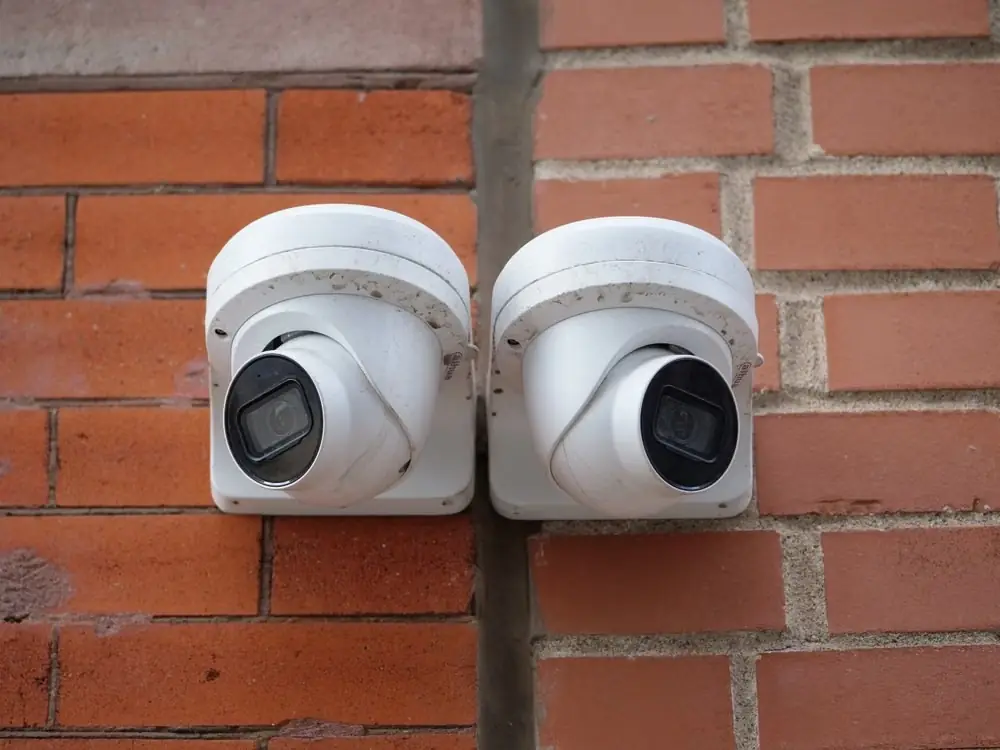
"AI camera" now appears on almost every CCTV box. In practice it means the camera or recorder can recognise some kinds of objects, mainly people and vehicles, instead of just noticing that pixels changed.
The old problem: motion alerts
Basic motion detection reacts to anything: shadows, insects at night, trees, headlights. Owners get hundreds of useless notifications and switch alerts off, which defeats the purpose.
What AI adds
Human and vehicle detection
The camera classifies what moved. You can ask for alerts only when a person or vehicle appears. This is the most useful AI feature for homes and car parks. Our setup guide is AI human and vehicle detection.
Line crossing and intrusion zones
You draw a virtual line or area, such as a gate line or the garden boundary. An alert fires when a person crosses it. Good for perimeters and warehouses after hours.
Smart search
Instead of scrubbing through hours of video, you can ask the recorder to show only clips with people or vehicles in a time range. This saves a lot of time after an incident.
Face and number-plate recognition
Some systems recognise faces or read plates (ANPR). They suit access points and car parks, but they need correct lens, angle and lighting, and they raise privacy obligations. See CCTV privacy rules in the UAE.
Counting and heat maps
Retail users can count visitors and see busy zones. Useful for staffing, though it is analytics, not security.
Where AI struggles
- Poor lighting or heavy glare
- Cameras mounted too high or too far from the subject
- Heavy rain, dust or spider webs on the lens
- Crowded scenes
- Cheap cameras with weak processors
Where it is worth paying for
| Situation | Value |
|---|---|
| Villa gate and perimeter | High: fewer false alerts |
| Warehouse after hours | High: line crossing alerts |
| Shop entrance | Medium: counting and search |
| Indoor office | Low to medium |
What to ask before buying
- Does detection run on the camera or the recorder, and is it included or licensed per channel?
- Which events does it detect, and at what range?
- How are alerts delivered, and are they tested on your site?
- What happens to footage and face data, and where is it stored?
Set it up properly
AI works best when each camera has a clear view, correct height and a tuned sensitivity. We also recommend recording continuously, with AI used for alerts and search. See motion alerts on your phone.
Conclusion
AI makes CCTV quieter and faster to search. It does not replace good camera placement, enough storage or someone responding to alerts. Ask us for a recommendation on our CCTV service page.
Frequently asked questions
Does AI CCTV need internet?
Detection usually runs on the camera or recorder, so it works without internet. Internet is only needed to send alerts to your phone.
Is AI detection always right?
No. It reduces false alerts but can still miss or mislabel events, especially in poor light, heavy rain or at long distance. Treat it as an aid, not a guarantee.