General guidance, not legal advice. We are CCTV installers, not lawyers. Laws change and penalties depend on circumstances. For a specific case, ask a UAE lawyer or the relevant authority. Last reviewed: 28 October 2026.
CCTV is allowed in the UAE for security. The issues are where the camera looks, who sees the footage and what you do with it.
What the law says in broad terms
UAE federal law protects privacy, and the Cybercrimes Law (Federal Decree-Law No. 34 of 2021) is widely reported to cover using technology to invade someone's privacy, including taking or publishing images without consent. Penalties reported in the press and by law firms are serious. The UAE's personal data protection law (Federal Decree-Law No. 45 of 2021) also exists, and how it applies to a given CCTV system can depend on the situation. Read the texts on the official UAE Legislation portal or take legal advice.
Our existing help article Is home CCTV legal in the UAE? goes into the home case in more depth.
Camera placement
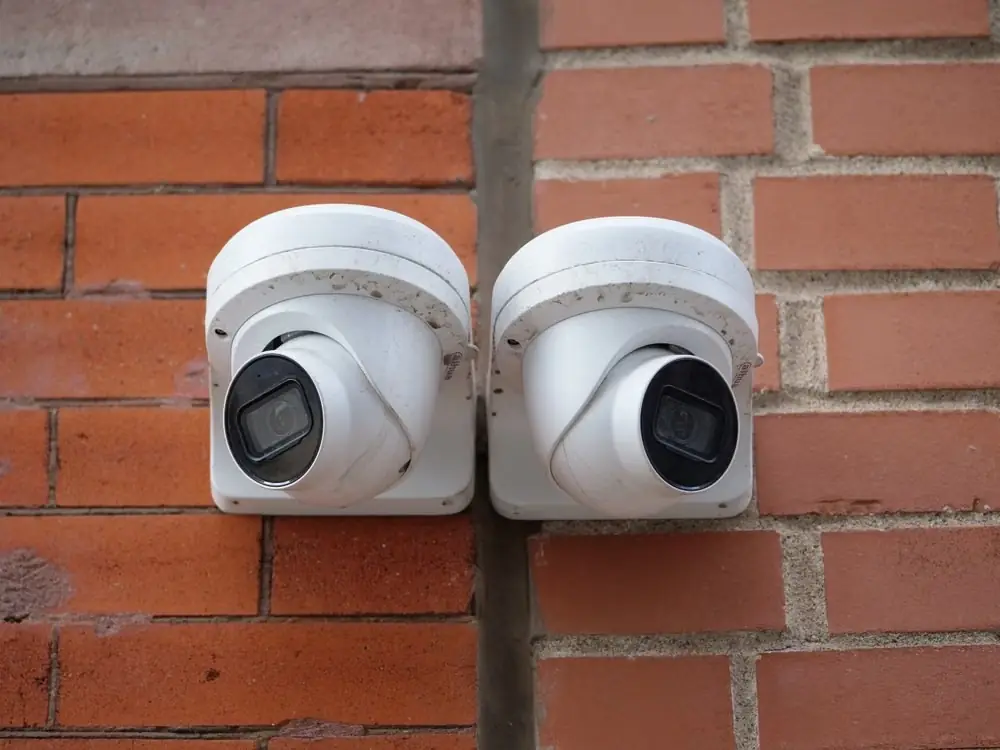
Usually fine: your gate, front door, driveway, garage, garden and shared internal areas, angled at your own property.
Avoid:
- Views into neighbours' windows, gardens or doors
- Toilets, changing rooms, bedrooms, prayer rooms
- Wide shots of the street or other people's homes
Use the camera's privacy mask to black out unavoidable areas. For tips on choosing positions, see home CCTV buyer's guide.
Signs
For businesses, warning signs at entrances are standard practice and commonly expected by authorities. Even at home, a sign is a good deterrent and a courtesy. Signs should be visible and simple.
Audio
Recording conversations is more sensitive than video. Turn microphones off unless needed and lawful.
Staff and customers
Tell staff that cameras are in use and why. Keep cameras to work areas.
Who can see the footage
Limit access. Use named accounts, not a shared password. Keep the recorder locked. Strong security reduces the chance of leaks: secure CCTV cameras against hackers.
Sharing footage
- Give footage to the police when asked or after an incident.
- Do not post clips of identifiable people on social media or WhatsApp groups.
- Abu Dhabi Police and others have repeated this advice publicly.
- Keep a record of what was handed over and to whom.
Retention
Keep footage only as long as you need or as long as the rule for your activity requires. See how long CCTV footage is stored in the UAE.
Checklist
- Cameras aimed at your own property
- Privacy masks set where needed
- Audio off unless justified
- Signs where appropriate
- Access limited and passwords strong
- Footage shared only with authorities
Conclusion
Respect neighbours' privacy, tell people, secure the system and keep clips off social media. When in doubt, take legal advice.
Frequently asked questions
Can I record audio on my cameras?
Audio can capture private conversations. Switch it off unless you have a clear reason, and make sure people know. See our audio guide in the help centre.
Can I post a clip of a thief online?
We advise against it. Posting images of people can expose you to a complaint under UAE privacy and cybercrime rules. Give the footage to the police.